
Introduction
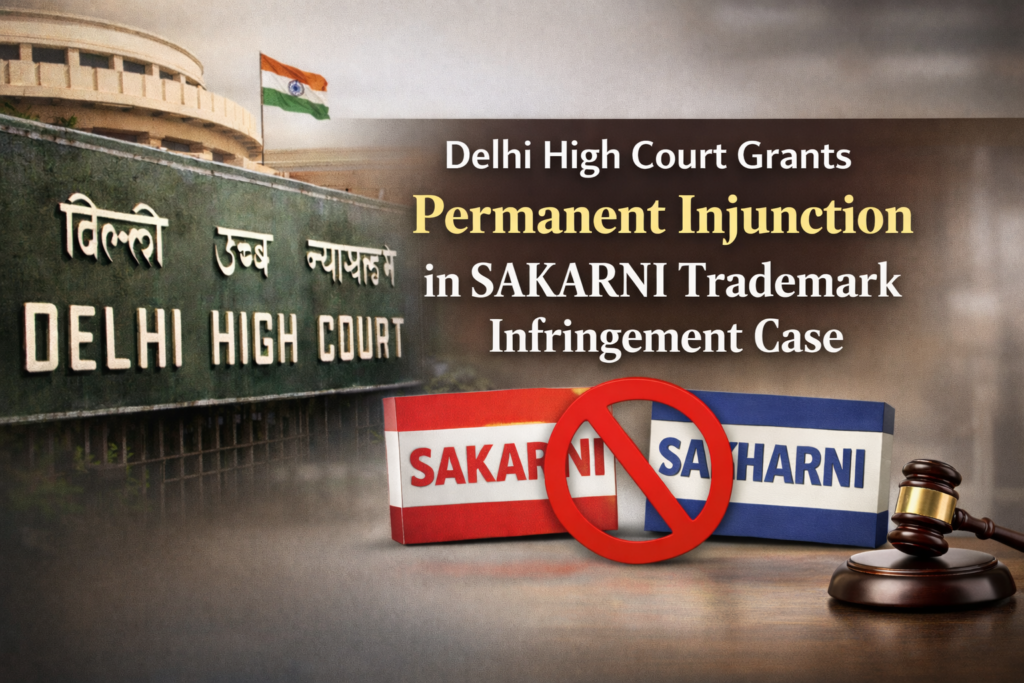
In a significant judgment strengthening trademark and copyright enforcement in India, the Delhi High Court in Ashok Kumar Gupta v. Arif Khan (CS(COMM) 608/2023 & I.A. 16670/2023) granted a permanent injunction along with damages against the defendant for adopting a deceptively similar trademark and label. Decided on 28 February 2025 by Hon’ble Mr. Justice Amit Bansal, the ruling reiterates the Court’s strict stance against dishonest adoption of trademarks, particularly in cases where the defendant deliberately avoids judicial proceedings. The judgment comprehensively addresses trademark infringement, passing off, copyright infringement, and the legal consequences of ex-parte conduct in commercial intellectual property disputes.
Factual Background
The plaintiffs in the suit were:
- Ashok Kumar Gupta, Proprietor of Jai Durga Plaster Industries
- Sakarni Plaster (India) Pvt. Ltd.
The plaintiffs are engaged in manufacturing and selling Plaster of Paris, wall putty, and allied construction materials under the trademark “SAKARNI” and its Hindi variant “सकारणी”. The mark has been in continuous commercial use since 2004 and is registered under Class 19 of the Trade Marks Act, 1999. Through consistent quality, extensive distribution, and promotional efforts, the plaintiffs established substantial goodwill and market recognition. The mark “SAKARNI” had become uniquely associated with their products. The dispute arose when the plaintiffs discovered that the defendant, Arif Khan, had started marketing identical goods under the mark “SIKARNI” / “सिकारणी”, using a label that closely resembled the plaintiffs’ packaging in terms of layout, font, and overall trade dress. The adoption was alleged to be intentional, dishonest, and aimed at riding upon the plaintiffs’ established reputation.
Nature of the Suit and Reliefs Sought
The plaintiffs filed a commercial suit before the Delhi High Court seeking:
- Permanent injunction restraining trademark infringement
- Permanent injunction restraining copyright infringement
- Relief against passing off
- Delivery up of infringing goods
- Damages and costs
Despite valid service of summons, the defendant failed to appear or file a written statement within the prescribed time. Consequently, the defendant’s right to defend was closed, and the matter proceeded ex-parte.
Issues Considered by the Court
In light of the ex-parte proceedings, the Court examined whether the plaintiffs had established:
- Trademark infringement under the Trade Marks Act, 1999
- Passing off based on prior use and goodwill
- Copyright infringement in the artistic label
- Entitlement to damages and costs due to the defendant’s conduct
Trademark Infringement: Deceptive and Phonetic Similarity
The Court held that the defendant’s mark “SIKARNI” was phonetically identical and deceptively similar to the plaintiffs’ registered mark “SAKARNI”. The minor alteration of substituting the letter “A” with “I” and the addition of expressions like “No.1” were found to be legally insignificant.
Justice Amit Bansal emphasized that:
- Both marks were used for identical goods
- The target consumers were ordinary purchasers of construction materials
- The likelihood of confusion and deception was extremely high
Reiterating settled law, the Court held that trademarks must be compared as a whole, from the perspective of an average consumer with imperfect recollection. Viewed in this manner, the defendant’s mark was clearly capable of misleading the public.
Passing Off: Prior Use and Established Goodwill
On the issue of passing off, the plaintiffs successfully demonstrated:
- Continuous use of the “SAKARNI” mark since 2004
- Trademark registration since 2007
- Extensive commercial presence and market goodwill
The Court held that the defendant’s conduct amounted to misrepresentation calculated to deceive consumers into believing that the defendant’s products originated from or were connected with the plaintiffs. The dishonest intent was inferred from the close similarity of the marks, identical nature of goods, and the defendant’s failure to provide any justification for adopting such a mark.
Copyright Infringement: Protection of Artistic Label
In addition to trademark rights, the plaintiffs were also registered copyright owners of the artistic label “SAKARNI PLASTER / SAKARNI”. Upon comparison, the Court found the defendant’s label to be a near replica, incorporating similar font styles, colour combinations, layout, and visual elements.
The Court held that:
- The plaintiffs’ label qualified as an original artistic work under the Copyright Act, 1957
- The defendant’s use amounted to substantial reproduction
- Such copying constituted clear copyright infringement
The overlap between trademark and copyright infringement further reinforced the plaintiffs’ case.
To know more about this, please check the link below.
Ex-Parte Proceedings and Legal Presumptions
Given the defendant’s continued absence, the Court treated the plaintiffs’ pleadings and documentary evidence as admitted. Relying on Satya Infrastructure Ltd. v. Satya Infra & Estates Pvt. Ltd. [2013 (54) PTC 419 (Del)], the Court observed that where pleadings are supported by affidavits and documents, directing formal ex-parte evidence serves no meaningful purpose. Accordingly, the suit was decreed under Order VIII Rule 10 of the Code of Civil Procedure, 1908.
Award of Damages and Costs
A significant aspect of the judgment was the award of INR 1,00,000/- as aggravated damages and costs. The Court relied on M/s Inter Ikea Systems BV v. Imtiaz Ahamed & Anr., holding that defendants who evade judicial proceedings should not be permitted to benefit from such conduct. The damages were awarded not merely as compensation, but also as a deterrent against dishonest commercial practices.
Final Reliefs Granted
The Delhi High Court decreed the suit in favour of the plaintiffs and granted:
- Permanent injunction restraining the defendant from using “SIKARNI” or any deceptively similar mark
- Permanent injunction restraining copyright infringement of the plaintiffs’ artistic label
- Aggravated damages and costs amounting to INR 1,00,000/-
Significance of the Judgment
This ruling reinforces key principles of Indian trademark law:
- Minor spelling changes do not defeat infringement where phonetic similarity exists
- Prior use and goodwill remain decisive in passing off actions
- Ex-parte defendants cannot escape liability by avoiding court proceedings
- Courts will award damages to deter dishonest infringement
For brand owners, the decision highlights the importance of trademark registration, documentation, and prompt enforcement. For infringers, it sends a clear message that imitation and evasion will attract strict judicial consequences.
Conclusion
The decision in Ashok Kumar Gupta v. Arif Khan stands as a strong affirmation of intellectual property protection in India. By granting permanent injunctive relief and monetary damages in an ex-parte proceeding, the Delhi High Court demonstrated its commitment to safeguarding brand integrity and consumer trust. The judgment significantly strengthens the enforcement framework for trademarks and copyrights and adds meaningful precedent to India’s evolving commercial IP jurisprudence.