
Introduction
Dubai continues to rank among the world’s most attractive real estate destinations for foreign investors. Tax-free income, strong rental yields, residency-linked property options, and a globally connected economy make it a powerful magnet for international capital. However, despite the opportunity, many overseas buyers make avoidable errors when entering the market. While Dubai’s property system is transparent and investor-friendly, it functions differently from European, Asian, or North American markets. Misunderstanding regulations, chasing speculative gains, or skipping due diligence can significantly reduce returns.
If you’re considering investing in 2026, here are the most common mistakes foreign investors make—and how to avoid them.
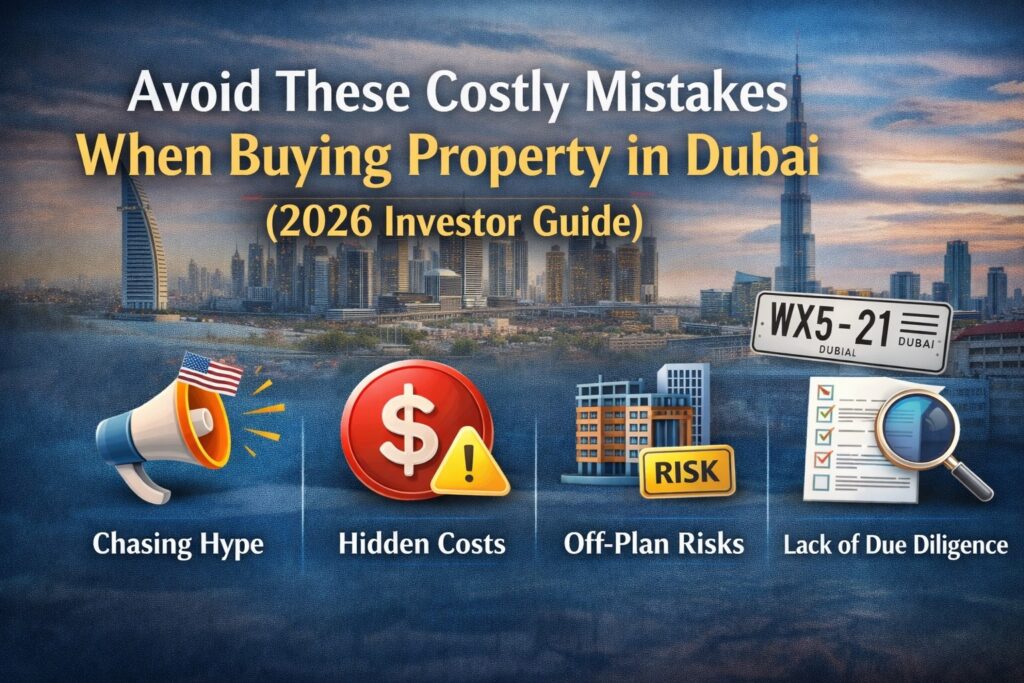
1. Chasing Hype Instead of Fundamentals: Dubai is known for ambitious launches, luxury branding, and attractive payment plans. Many investors purchase off-plan properties based on projected appreciation or marketing claims without assessing:
- Actual rental demand
- Supply pipeline in the area
- Comparable resale transactions
- Long-term infrastructure growth
Smart investors analyze location fundamentals, not promotional brochures. Focus on communities with proven rental stability and resale liquidity.
2. Underestimating Total Acquisition Costs: Foreign investors often calculate only the property price and overlook associated fees. In Dubai, buyers should account for:
- 4% Dubai Land Department (DLD) transfer fee
- Trustee registration fees
- Agency commission (typically 2%)
- Mortgage registration fees (if applicable)
- Annual service charges
Failing to factor in these costs can significantly impact projected ROI. Always calculate total upfront and recurring expenses before committing.
3. Not Understanding Freehold Ownership Zones: Foreign ownership in Dubai is permitted in designated freehold areas only. Some investors mistakenly assume they can purchase property anywhere in the city.
Before proceeding, confirm:
- The property lies within a freehold zone
- The ownership rights granted
- Any community-specific restrictions
Clarity on legal ownership structure is essential to avoid future complications.
4. Ignoring Service Charges: Service charges can materially reduce rental yields—especially in luxury towers with premium amenities such as pools, concierge services, private beaches, and gyms.
Before purchasing, request:
- Current service charge per square foot
- Historical increases
- Upcoming maintenance assessments
Net yield, not gross rental income, determines true profitability.
5. Investing in Oversupplied Areas: Dubai develops rapidly, and certain districts experience heavy supply influx. Buying in areas with large upcoming handovers and limited infrastructure can suppress rental rates and resale values.
Research:
- Number of upcoming projects
- Infrastructure maturity
- Historical price stability
- Rental absorption trends
Established communities often offer greater long-term resilience.
6. Misjudging Off-Plan Risks: Off-plan properties attract investors due to flexible payment plans and lower entry prices. However, risks include:
- Market shifts before completion
- Developer delays
- Overestimated appreciation
- Payment schedule strain
Always evaluate the developer’s track record, escrow compliance, and delivery history. Timing and credibility matter significantly in off-plan investments.
7. Failing to Define a Rental Strategy: Dubai offers two primary rental models:
- Long-term leasing
- Short-term holiday home rentals
Each has different licensing requirements, furnishing standards, and management intensity. Short-term rentals require permits and active management but may generate higher gross returns. Long-term leasing offers stable, predictable income. Decide your strategy before purchasing.
8. Ignoring Market Cycles: Dubai operates in real estate cycles—rapid growth phases followed by stabilization or selective corrections. Foreign investors sometimes enter during peak growth expecting uninterrupted appreciation. Understanding market cycles helps set realistic expectations and supports long-term strategy over speculation.
To know more about this, please check the link below.
9. Skipping Proper Due Diligence: Even in a well-regulated environment, due diligence remains critical. Before signing any agreement, verify:
- Title deed authenticity
- Developer escrow accounts (for off-plan)
- Outstanding service charges
- Seller’s ownership rights
- Building reputation and quality
Professional legal and transactional review can significantly reduce risk exposure.
10. Managing Remotely Without Local Support: Many international buyers attempt to manage everything from abroad. This can lead to challenges in:
- Paperwork coordination
- Banking processes
- Tenant management
- Maintenance supervision
- Regulatory compliance
Trusted local representation improves transaction efficiency and long-term asset performance.
11. Emotional Buying: Dubai’s skyline, luxury marketing, and showrooms can trigger emotional purchases.
Investment success depends on:
- Rental comparables
- Demand trends
- Infrastructure expansion
- Exit flexibility
Make decisions based on numbers and long-term viability—not aesthetics alone.
12. Not Planning an Exit Strategy: Every property investment should include a defined exit strategy.
Ask yourself:
- Is this a long-term rental hold?
- A resale upon project completion?
- A 5–10 year capital appreciation play?
Without clarity, reacting to market shifts becomes difficult. Strategic foresight ensures flexibility and risk control.
Conclusion
Dubai remains one of the most compelling real estate markets globally for foreign investors. Tax-free income, strong rental yields, regulatory transparency, and residency-linked property ownership create significant opportunity. However, success requires discipline, due diligence, and strategic planning. Most costly mistakes—chasing hype, ignoring fees, overlooking service charges, misjudging supply, or failing to plan an exit—are entirely avoidable with informed decision-making. Investing in Dubai property can be highly rewarding—but only when approached with clarity, data, and long-term vision rather than impulse.