
Introduction
Barcodes play a vital role in product tracking, inventory management, and retail operations. However, beyond scanning and logistics, packaging design remains one of the most powerful tools for product recognition.
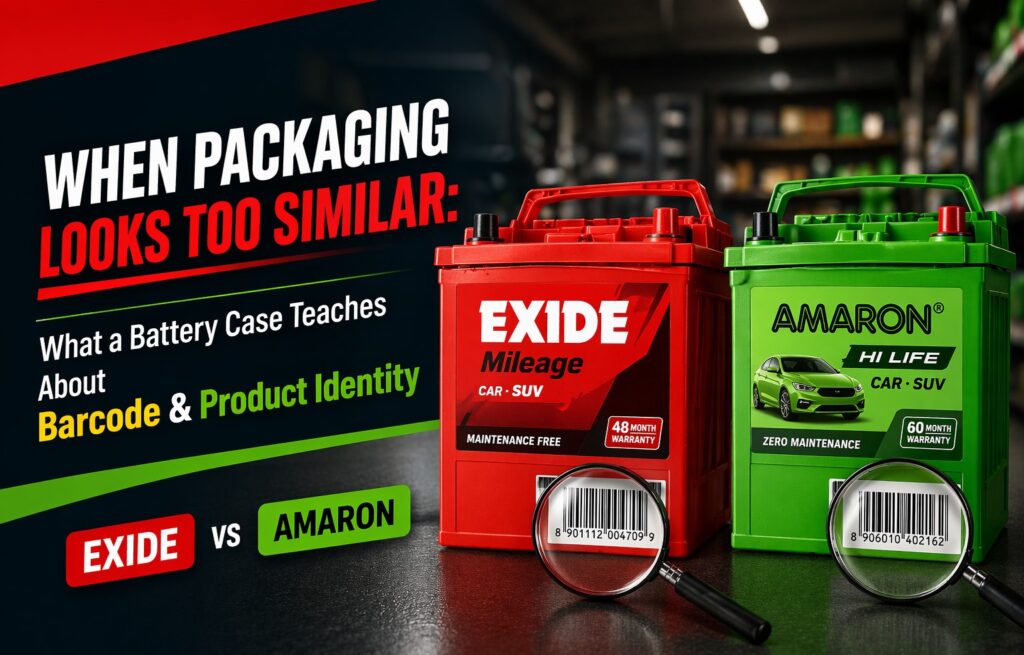
A recent legal dispute between leading battery manufacturers showed how packaging similarities can create confusion in the market. The case illustrates that even when barcodes and product details differ, visual similarity in packaging can still mislead consumers.
For barcode-driven businesses, this serves as an important reminder that barcode placement alone is not enough—distinct packaging design is equally essential.
Packaging and Brand Identity: Why Visual Design Matters
Product packaging acts as the first point of interaction between a brand and its customers.
Key elements that shape packaging identity include:
- Colour combinations
- Typography and layout
- Product labels
- Barcode placement
- Visual balance and design elements
When these features are consistent and distinctive, they help customers quickly recognize products—even from a distance.
The Risk of Similar Packaging
The Court closely examined competing battery products and found that their overall visual appearance was deceptively similar, especially in colour usage.
This finding highlights an important lesson for barcode and packaging users:
Similarity in packaging design can create confusion—even when product specifications differ.
Retail environments are fast-paced, and customers often rely on:
- Colour recognition
- Packaging familiarity
- Brand recall
rather than reading detailed product information.
To know more about this you can follow the link below:
https://youtu.be/E_Sadr2TUfI?si=a7HgDzBTu6RfUpy2
What This Means for Barcode-Based Businesses
1. Barcode Systems Support—but Do Not Replace—Brand Identity
Barcodes enable accurate product tracking, but visual packaging builds customer trust and recognition.
A strong packaging strategy ensures:
- Faster shelf identification
- Better brand recall
- Reduced risk of mistaken purchases
- Improved customer confidence
2. Distinct Packaging Reduces Legal Risks
Using unique packaging designs helps businesses:
- Avoid consumer confusion
- Maintain brand individuality
- Reduce risk of imitation claims
- Protect long-term market presence
Consistency across product lines strengthens the brand’s visual identity.
3. Strategic Barcode Placement Enhances Product Recognition
While barcodes are primarily functional, their placement should align with overall packaging design.
Best practices include:
- Maintaining consistent barcode positions
- Avoiding cluttered layouts
- Integrating barcodes into a visually balanced design
- Ensuring readability without affecting brand aesthetics
Key Takeaways for Packaging & Barcode Users
✔ Use unique colour combinations that distinguish your products
✔ Maintain consistent visual branding across packaging
✔ Avoid adopting designs similar to competitors
✔ Integrate barcode placement into a well-structured design
✔ Treat packaging as an important brand asset
Legal Insight: Packaging Is More Than Just Design
The Court’s ruling reinforces that visual presentation—including colour and layout—can function as a brand identifier.
Businesses should understand that:
- Packaging design can acquire legal protection
- Visual similarity can lead to disputes
- Brand identity includes both functional and visual elements
- Unique packaging strengthens both marketing and legal standing
Conclusion
This case serves as a valuable lesson for barcode and packaging-focused businesses. While barcodes enable efficiency and traceability, distinct packaging ensures recognition, trust, and brand protection.
Companies that invest in original packaging design alongside effective barcode integration are better positioned to succeed in competitive markets and avoid costly legal disputes.