
Overview
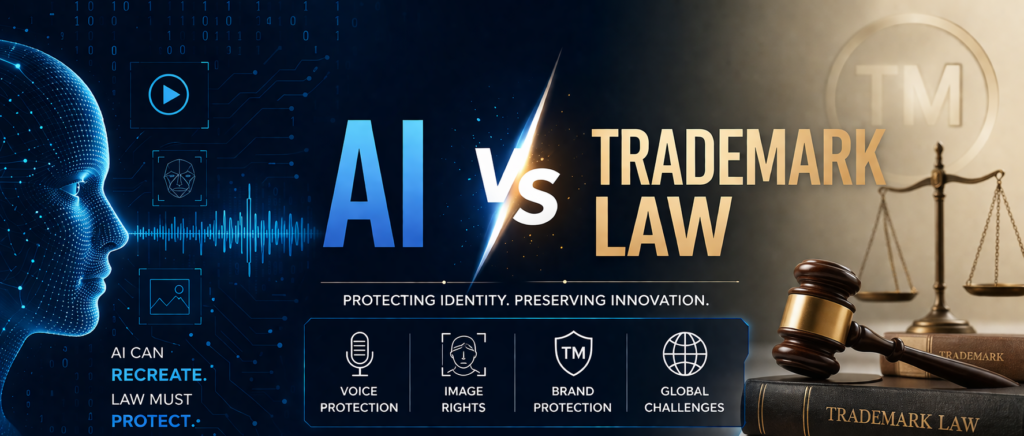
Artificial intelligence is rapidly transforming the way content is created—and copied. One of the most pressing concerns today is the ability of AI to replicate human identity, including voices, faces, and personalities. This has placed celebrities at the center of a growing legal battle, where intellectual property law is being tested against emerging technology.
Public figures like Taylor Swift are now exploring innovative legal strategies to safeguard their identity, particularly through trademark protection. But how effective is this approach?
AI vs Identity: A New Legal Challenge
AI tools today can generate hyper-realistic audio, images, and videos, making it difficult to distinguish between real and artificial content. For celebrities, whose value is deeply linked to their personal identity, this creates a serious risk.
The unauthorized use of a celebrity’s voice or likeness is no longer hypothetical—it is happening at scale. Traditional legal protections are struggling to keep up, forcing a shift toward creative legal solutions.
Trademarks as a Shield
To tackle this issue, Taylor Swift has reportedly moved to trademark specific aspects of her identity. These include short voice phrases like “Hey, it’s Taylor Swift” and distinctive visual representations.
The goal is clear: create enforceable rights over elements of identity that are most vulnerable to AI misuse.
This trend is not limited to one individual. Matthew McConaughey has also secured trademarks for recognizable aspects of his persona, including his famous line from Dazed and Confused. Celebrities are increasingly using trademarks not just for branding, but as a form of identity protection.
To know more about this, Click the link below –
Where Trademark Law Falls Short
While trademarks offer some protection, they are not designed to cover an individual’s entire identity. Their primary purpose is to prevent consumer confusion in commercial use.
This means protection is limited to specific registered elements—such as a phrase, logo, or image—not the broader personality or likeness of a celebrity.
Adding to the complexity is the right of publicity, which directly deals with unauthorized commercial use of identity. However, this right is inconsistent across jurisdictions. In countries like India, it exists mainly through court decisions rather than clear legislation, making enforcement uncertain.
The Real Problem: Enforcement in the AI Era
Even when trademarks exist, enforcing them against AI-generated content is challenging:
- A voice that sounds like Taylor Swift but doesn’t use the exact trademarked phrase may not qualify as infringement.
- AI-generated images that resemble a celebrity but do not replicate a specific registered photo may fall outside legal protection.
This highlights a critical gap—AI can mimic broadly, while trademark law protects narrowly.
On top of this, digital content operates globally. An AI-generated clip can be created in one country, hosted in another, and viewed worldwide, raising serious jurisdictional and enforcement issues.
What Lies Ahead?
Using trademark law to combat AI-driven identity misuse is a smart but limited workaround. It provides some level of protection, but it is far from comprehensive.
The growing capabilities of AI demand stronger and more unified legal frameworks—whether through new laws or better international coordination. Until then, celebrities and legal professionals will continue navigating this uncertain space using existing tools.
Conclusion
The clash between AI technology and identity rights is just beginning. While trademark law offers a partial solution, it cannot fully address the scale and complexity of AI-generated impersonation.