
Introduction
Dubai’s tax landscape is evolving, balancing global compliance with incentives that make it highly attractive for both individuals and businesses. While residents continue to enjoy zero personal income tax, capital gains tax, and inheritance tax, businesses face corporate tax obligations, VAT, excise duties, and new compliance requirements such as e-invoicing. Understanding what is taxable, and what is not, is essential for anyone living or operating in Dubai.
Why Dubai Remains a Low-Tax Haven
Dubai has long been synonymous with tax efficiency, particularly for expatriates. Key highlights for individuals in 2026 include:
- Personal Income Tax: Residents pay 0% tax on salaries, allowances, and bonuses, making Dubai one of the most tax-efficient places to earn a living.
- Capital Gains & Dividends: Investments, including stock trading and crypto gains, remain tax-free. Dividends are also exempt from taxation.
- Wealth & Inheritance Tax: There are no federal wealth, gift, or inheritance taxes, allowing assets to be transferred without tax burden.
- Rental Income: Property income is largely exempt from personal taxation, supporting Dubai’s booming real estate sector.
This combination of benefits ensures individuals retain more of their earnings and enjoy financial flexibility.
Indirect Taxes and Business Obligations
While direct taxes for individuals are minimal, Dubai has introduced indirect taxes and business-related levies to diversify revenue:
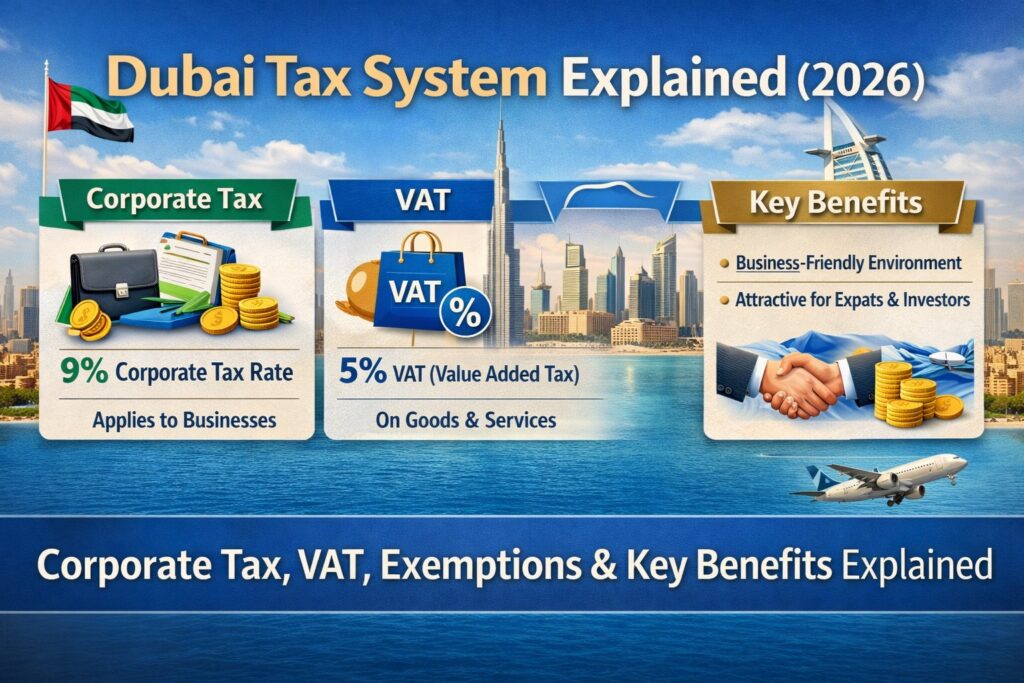
- Value Added Tax (VAT): A standard 5% VAT applies to most goods and services, with exemptions for healthcare, education, international transport, and the first sale of residential properties.
- Corporate Tax: Profits above AED 375,000 are taxed at 9%, while small businesses under AED 3 million may enjoy a 0% rate until the end of 2026.
- Excise Tax: Levied on products harmful to health—50% on sugary beverages and 100% on tobacco and energy drinks.
- Municipal Fees & Tourism Dirham: Residents pay a housing fee (~5% of annual rent) via utility bills. Hotel guests pay AED 7–20 per night as the Tourism Dirham.
These indirect taxes aim to modernize the economy while keeping Dubai competitive for global talent and business investment.
Key Tax Updates in 2026
Several significant changes in 2026 are reshaping Dubai’s tax framework:
- Corporate Tax & DMTT: Large multinational companies with global revenues above €750 million are subject to a 15% Domestic Minimum Top-Up Tax (DMTT), ensuring fair contribution.
- VAT Reforms & E-Invoicing: Mandatory e-invoicing is being phased in for all businesses, with full compliance required by 2027 for larger companies. VAT refunds must now comply with a five-year claim limit.
- R&D Incentives: Tax credits of 30–50% on qualifying R&D expenses encourage innovation and foreign investment.
- Indirect Taxes on Individuals: New tiers of sugar tax and other excise duties aim to promote healthier consumption.
To know more about this, please check the link below.
Implications for Expatriates
For Individuals:
- Enjoy tax-free salaries, but plan for indirect costs such as VAT, excise taxes, and municipal fees.
- Proactive financial planning helps maximize disposable income while remaining compliant with local regulations.
For Businesses:
- Adapting to corporate tax, VAT compliance, and e-invoicing is critical.
- Understanding exemptions and reliefs, like small business support and R&D incentives, can reduce tax liabilities.
- Keeping accurate records will ensure smooth compliance and timely VAT refund claims.
Conclusion
Dubai continues to be a tax-friendly hub for individuals while evolving into a more structured environment for businesses. By combining 0% personal tax with strategic corporate and indirect taxes, Dubai balances competitiveness with global compliance. Understanding the nuances of VAT, corporate taxation, excise duties, and upcoming reforms is essential for anyone living, working, or investing in Dubai. Staying informed allows individuals to enjoy the financial advantages of this unique city while enabling businesses to thrive under a modernized tax framework.