
Introduction
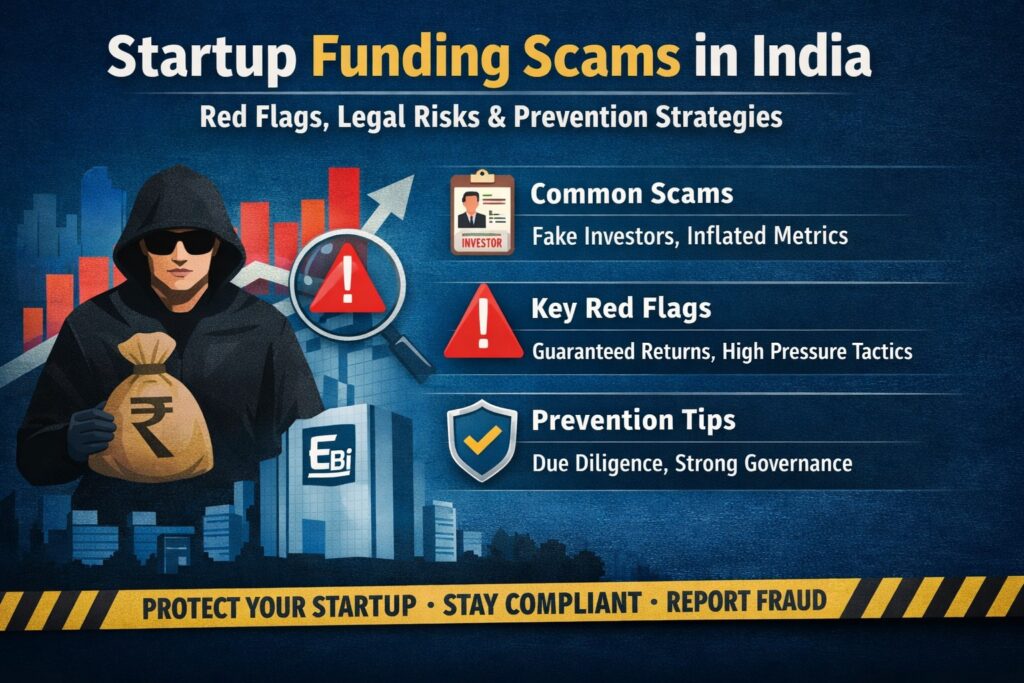
India’s startup ecosystem has evolved into one of the largest and most dynamic in the world, driven by venture capital inflows, government initiatives, and a growing appetite for innovation. Yet, this rapid expansion has also exposed structural weaknesses—particularly in governance, compliance, and financial oversight. In recent years, several high-profile cases such as GoMechanic, Trell, and Zilingo have highlighted how weak internal controls, inflated metrics, and poor board oversight can erode trust and lead to massive financial and reputational losses. Startup funding scams now affect both sides of the table: founders are targeted by fake investors and predatory funding offers, while investors face deception through manipulated financial data and opaque governance structures. This article explores the most common scam patterns, warning signs, and preventive measures essential for safeguarding India’s startup ecosystem.
Common Startup Funding Scams
A. Internal Fraud and Governance Failures
1. Inflated Revenues and Metrics
One of the most common forms of startup fraud involves the artificial inflation of revenues, user numbers, or growth metrics. This may include fictitious customers, fabricated invoices, or “round-tripping” transactions designed solely to present exaggerated performance figures during fundraising rounds.
2. Diversion or Siphoning of Funds
In certain cases, investor capital is misappropriated and diverted to unrelated businesses, shell entities, or personal accounts of promoters. Such conduct not only violates fiduciary duties but may also attract criminal liability under Indian law.
3. Undisclosed Related-Party Transactions
Transactions involving promoters, relatives, or connected entities—without proper disclosure or commercial justification—are a major governance red flag. These practices often mask fund diversion and undermine investor trust.
B. External Scams Targeting Founders
1.Advance-Fee or Pay-to-Pitch Scams
Fraudsters often impersonate investors, accelerators, or venture funds and demand upfront “facilitation,” “curation,” or “processing” fees in exchange for funding promises. Legitimate investors never charge fees to review or consider pitches.
2. Fake Investors and Clone Firms
Sophisticated scams now involve cloned websites, spoofed email domains, and forged credentials—such as deceptively similar domains resembling reputed VC firms. Founders may be pressured into sharing sensitive data or transferring funds.
3. Predatory Funding Instruments
Some offers involve convertible notes or debt instruments with exploitative clauses—excessive interest rates, forced repayment triggers, or harsh dilution terms—that can cripple a startup financially if not carefully vetted.
Key Red Flags for Founders and Investors
- Guaranteed or Risk-Free Returns: Any assurance of high, fixed returns in startup investments should be treated with extreme caution.
- Urgency and Pressure Tactics: Artificial deadlines and “take it or leave it” offers are commonly used to bypass rational decision-making.
- Lack of Transparency: Absence of verifiable registration, unclear fund sources, personal bank accounts for business transactions, or non-compliance with SEBI norms.
- Inadequate Due Diligence: Founders must verify investor credibility through portfolio references, while investors must rigorously examine financials, governance structures, and audit trails.
Reporting Startup Funding Fraud in India
Victims of startup-related financial fraud can report incidents through official channels, including:
- National Cyber Crime Reporting Portal: cybercrime.gov.in
- Cybercrime Helpline: 1930
Prompt reporting increases the likelihood of recovery and regulatory intervention while helping authorities identify broader fraud networks.
Why Startup Funding Scams Are Increasing
- “Growth at All Costs” Mindset: Pressure to achieve rapid scale and unicorn valuations often incentivizes unethical practices.
- Weak Corporate Governance: Many startups lack independent directors, internal controls, and structured compliance frameworks.
- Limited Enforcement: Regulatory mechanisms exist, but inconsistent enforcement and delayed consequences reduce deterrence.
- Investor FOMO: Competitive deal-making can result in compromised due diligence.
- Founder Vulnerability: First-time founders may lack the legal and financial literacy required to identify fraudulent or predatory offers.
- Exploitation of Trust: Scammers leverage professional branding, social media presence, and aspirational narratives to appear credible.
To know more about this, please check the link below.
Preventive Measures and Best Practices
1.Strong Governance from Day One
Maintain strict separation between personal and company finances and treat the startup as a distinct legal entity.
2. Checks and Balances
Ensure segregation of duties, dual authorization for major transactions, and documented approval processes.
3. Regular Audits and Compliance Reviews
Periodic internal and external audits help identify inconsistencies early and reinforce accountability.
4. Professional Advisory Support
Engage experienced chartered accountants, company secretaries, and legal advisors for compliance and transaction structuring.
5. Culture of Transparency
Clear disclosures, honest reporting, and open communication with investors significantly reduce fraud risks and enhance long-term credibility.
Conclusion
Startup funding scams pose a serious threat to India’s entrepreneurial ecosystem, undermining trust, innovation, and capital flow. Awareness, vigilance, and proactive governance are essential for both founders and investors. By recognising common scam patterns, conducting rigorous due diligence, and implementing strong compliance frameworks, stakeholders can significantly reduce exposure to fraud. Ultimately, a startup ecosystem rooted in integrity, transparency, and accountability is not only legally resilient but also better positioned for sustainable growth and investor confidence.