
Introduction
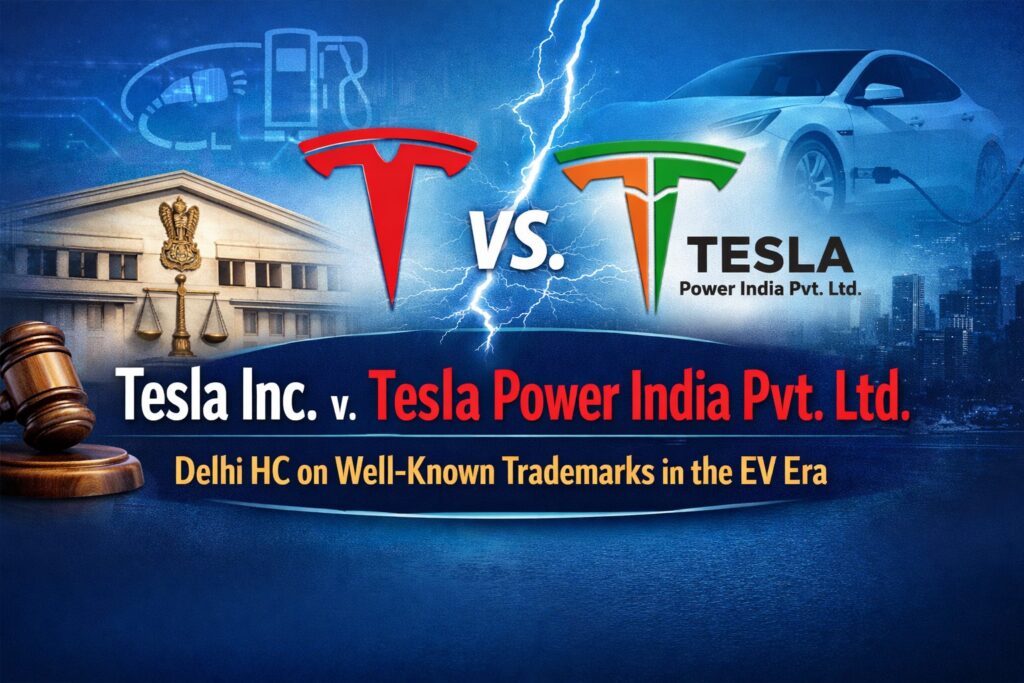
The electric vehicle ecosystem represents one of the most dynamic and competitive industries today, where innovation, sustainability, and brand value converge. As global players expand into emerging markets like India, trademark protection becomes a critical tool to preserve goodwill and prevent consumer confusion. The case of Tesla Inc. v. Tesla Power India Pvt. Ltd. illustrates how Indian courts balance the interests of established international brands with domestic businesses, particularly when similar marks are used in overlapping product categories such as batteries, energy solutions, and EV-related goods.
Case Background
Court and Procedural History
The matter was adjudicated by the High Court of Delhi under the coram of Hon’ble Mr. Justice Tejas Karia. On 24 November 2025, the Court granted an interim injunction restraining the defendants from using the mark “TESLA” and its variants. The commercial suit was initiated by Tesla Inc., seeking protection against alleged trademark infringement and passing off by Tesla Power India Pvt. Ltd. and related entities.
Key Facts of the Dispute
Tesla Inc., founded in 2003, has consistently used the TESLA mark since 2006 and enjoys extensive global recognition in the electric vehicle and clean energy space. The company holds multiple trademark registrations in India across classes relevant to automobiles, batteries, energy products, and related services. Its substantial global revenue growth and strong digital presence further reinforced its claim of trans-border reputation in India. The defendants, Tesla Power India Pvt. Ltd., operate in the energy and battery segment, primarily dealing with lead-acid batteries, inverters, and UPS systems. Despite asserting that they had no intention to enter the EV market under the TESLA name, their adoption of marks such as “TESLA POWER” and “TESLA POWER USA” raised serious concerns regarding brand dilution and consumer confusion.
Legal Framework Governing Trademark Protection
– Trademark Rights under Indian Law: The Trade Marks Act, 1999 grants exclusive statutory rights to registered trademark proprietors under Sections 28 and 31. These provisions empower courts to restrain unauthorised use of identical or deceptively similar marks, especially when such use is likely to mislead consumers.
– Protection of Well-Known Trademarks: Well-known trademarks enjoy enhanced protection beyond their registered classes of goods or services. In this case, Tesla Inc. relied heavily on the global recognition and goodwill associated with the TESLA mark, arguing that its reputation extended into India through digital presence, media coverage, and commercial activities.
To know more about this, please check the link below.
Findings of the Court
Grant of Interim Injunction
The Delhi High Court concluded that Tesla Inc. had established a strong prima facie case based on prior use, reputation, and goodwill. The Court observed that the dominant element “TESLA” was identical in both parties’ marks and that the addition of descriptive terms such as “POWER” or “USA” did not sufficiently distinguish the defendants’ marks.
Key Factors Considered
- Reputation and Goodwill: The Court acknowledged Tesla Inc.’s extensive global and Indian reputation, supported by revenue figures, trademark registrations, and website traffic data.
- Likelihood of Confusion: Given the overlap in goods and services related to energy and batteries, the use of the TESLA mark by the defendants was held likely to cause consumer confusion.
- Intent and Knowledge: The defendants’ awareness of Tesla Inc.’s established brand and their inconsistent explanations for adopting the mark weighed against them.
Implications for Trademark Law and Businesses
This decision reinforces the principle that well-known trademarks deserve robust protection, particularly in fast-growing sectors like electric mobility and renewable energy. It serves as a cautionary tale for businesses adopting globally recognised names, even when operating in adjacent or allied product categories.
Strategic Lessons for Brand Owners
- Proactive Trademark Registration: Early and comprehensive registration across relevant classes is critical.
- Vigilant Enforcement: Continuous monitoring and swift legal action help prevent dilution of brand value.
- Market Expansion Strategy: Companies entering new markets must assess existing trademark landscapes to avoid costly disputes.
Conclusion
The ruling in Tesla Inc. v. Tesla Power India Pvt. Ltd. underscores the judiciary’s commitment to protecting well-known trademarks in India’s evolving commercial environment. By granting interim relief, the Delhi High Court reaffirmed that brand reputation, consumer trust, and legal protection are integral to sustaining innovation-led industries. As the EV and clean energy sectors continue to grow, this case will remain a significant reference point for trademark enforcement and brand strategy in India and beyond.