
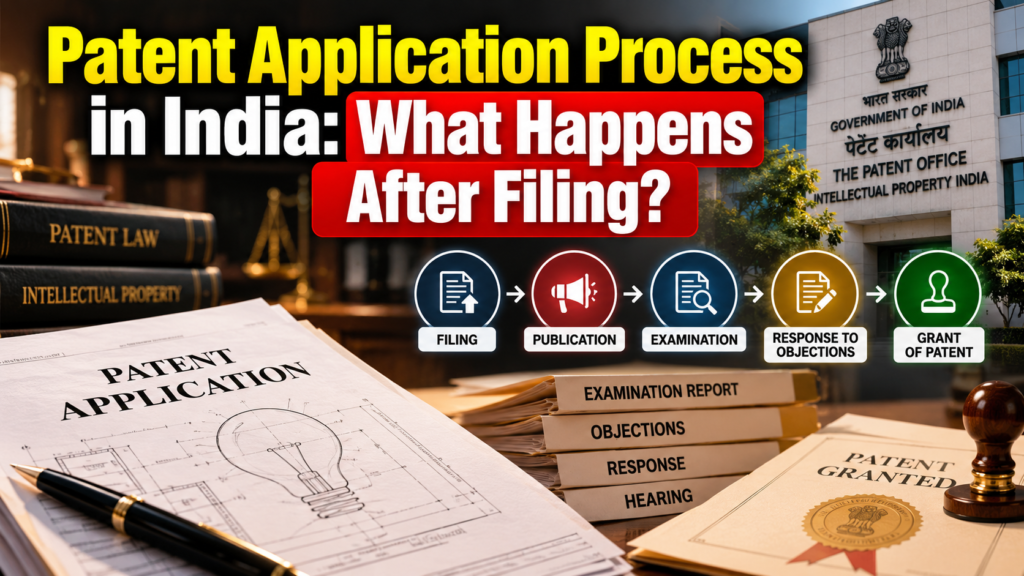
Filing a patent application in India is only the first step in obtaining patent protection. After the application is filed with the Indian Patent Office, it goes through several stages, including publication, examination, response to objections, and potentially a hearing, before a patent can be granted.
Understanding what happens after patent filing can help applicants, startups, inventors, and businesses manage the process effectively and avoid unnecessary delays.
1. Publication of the Patent Application
After filing, a patent application is generally published after the prescribed period under the Patents Act and Rules. The applicant may also request early publication where applicable.
Once the application is published, the details of the invention become publicly available, subject to the applicable provisions and exceptions.
2. Request for Examination
Filing and publication do not automatically mean that the application will be examined immediately. The applicant must file a Request for Examination (RFE) within the applicable time limit.
The Patent Office examines the application only after the examination request is properly made, subject to the applicable rules and procedures.
3. Examination by the Patent Office
During examination, the Patent Office reviews the patent application to determine whether it satisfies the requirements of Indian patent law.
The examination may involve issues such as:
- Novelty of the invention
- Inventive step
- Industrial applicability
- Sufficiency and clarity of disclosure
- Compliance with the Patents Act, 1970
- Compliance with the Patents Rules
- Formal and procedural requirements
The Patent Office may also consider prior-art documents and other relevant information while examining the application.
4. Examination Report and Patent Objections
If the Patent Office identifies objections or deficiencies, the applicant may receive an Examination Report, commonly referred to as a First Examination Report (FER).
The objections may relate to the patentability of the invention, claim construction, prior art, disclosure requirements, or other statutory and procedural requirements.
At this stage, the applicant generally needs to carefully analyse the objections and prepare an appropriate response.
5. Reply to Patent Objections
A response to the examination objections may include:
- Amendments to the patent claims
- Clarifications regarding the invention
- Legal and technical arguments
- Distinguishing the invention from cited prior art
- Supporting documents or evidence, where required
The objective is to address the objections while preserving the scope of protection available for the invention, subject to the applicable legal requirements.
6. Patent Hearing, Where Applicable
In certain cases, objections may remain unresolved even after the written response. The Patent Office may provide an opportunity for a hearing in accordance with the applicable procedure.
During the hearing, the applicant or their authorised representative may present arguments and clarify the issues raised by the Patent Office.
7. Grant of Patent
If the application complies with the applicable requirements and the objections are satisfactorily addressed, the Patent Office may proceed with the grant of the patent.
Once granted, the patent provides statutory rights to the patentee for the prescribed patent term, subject to the provisions of the Patents Act and compliance with applicable requirements.
Why Patent Prosecution Is Important
Patent filing is not simply a matter of submitting an application and waiting for a patent certificate. Patent prosecution after filing is an important part of the process.
Properly responding to examination objections, making appropriate claim amendments, presenting relevant arguments, attending hearings where required, and complying with procedural deadlines can significantly affect how the application progresses.
Conclusion
The patent application process in India involves several stages after filing, including publication, examination, responding to objections, hearings where applicable, and eventual grant.
For inventors, startups, and businesses, understanding these stages is important for effectively managing a patent application. Professional assistance with patent drafting, patent prosecution, examination responses, claim amendments, and hearings can help applicants navigate the process more effectively.
Keywords: patent application process in India, what happens after filing a patent application, patent examination in India, patent objections, First Examination Report, FER response, patent prosecution, patent hearing, patent grant, patent registration in India, Indian Patent Office.